Sports Shop Fanatics Lifts MLB Shopping 10% With OpenAI Outfits
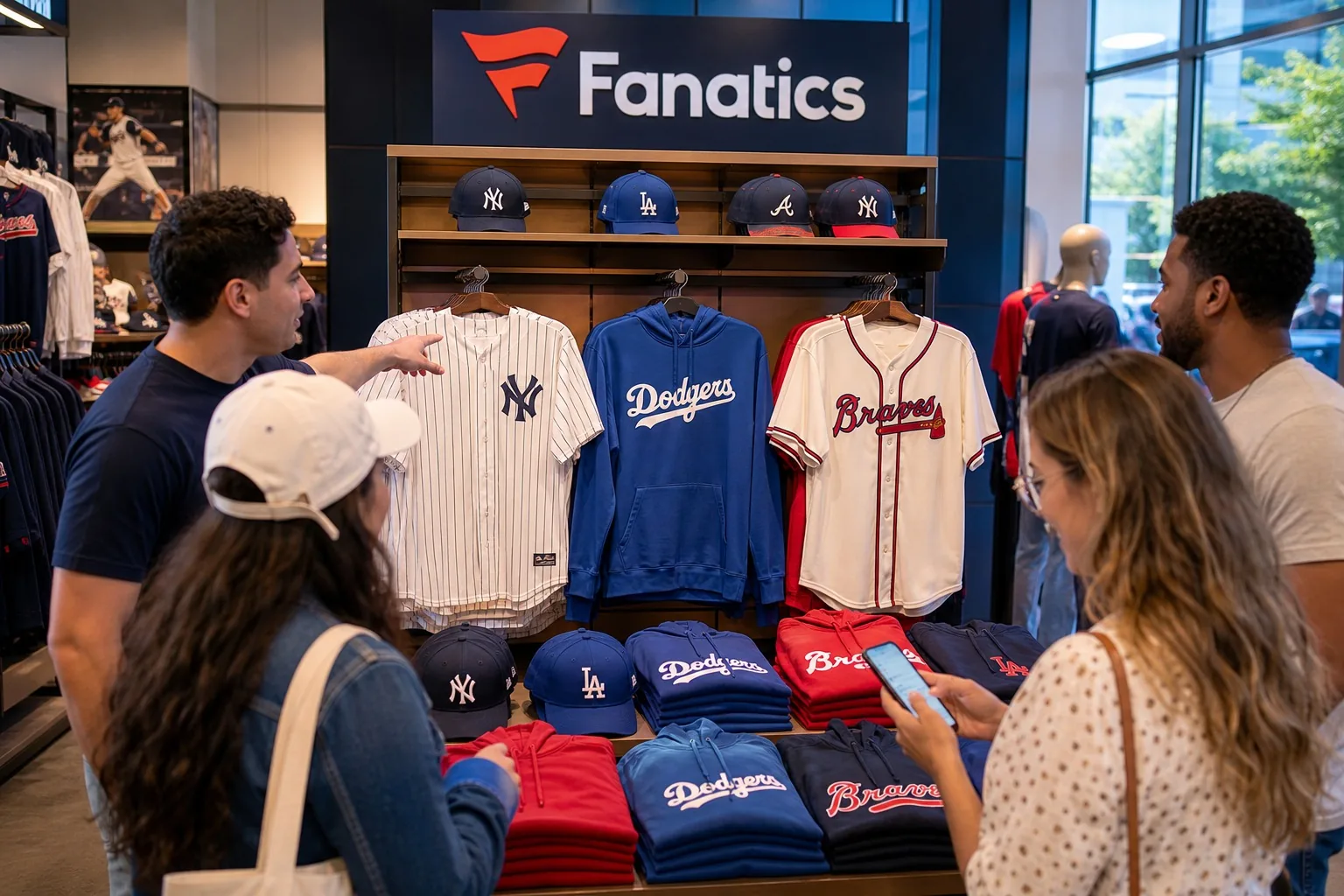
Sports gear seller Fanatics says its new shop the look tool, built with OpenAI, lifted shopper engagement 10% in tests across about 30,000 MLB items by bundling outfits.
Key Takeaways
- Fanatics used OpenAI tools to build shop the look
- Testing across about 30,000 MLB products produced a 10% engagement increase
- OpenAI did not publish revenue impact, conversion lift or model details
- Shop the look groups existing catalog products into guided outfits rather than single-item search results
OpenAI said the feature helps shoppers find game-day outfits by assembling items into a guided set rather than leaving users to search product pages one by one. Fanatics runs one of the largest licensed sports merchandise businesses in the U.S., which makes even a modest engagement gain meaningful when discovery spans thousands of similar items.
OpenAI And Fanatics Turn Search Into Styling
The practical problem is familiar to every large retailer.
Search works when a buyer knows the exact jersey, cap or hoodie they want. It works less well when the buyer wants a complete look or only has a vague team, color or event in mind.
Shop the look pushes the interaction up a level.
Instead of matching a single keyword to a single product, the system groups products into an outfit or occasion. That sounds simple, but it changes the retrieval task from item lookup to intent assembly.
OpenAI did not publish revenue impact, conversion lift or model details.
It did publish one concrete number, a 10% engagement increase across roughly 30,000 MLB items during testing. That makes this more useful than a generic AI improves shopping claim.
From Chat Demos To Measured Retail Tests
Earlier consumer AI commerce efforts often stopped at chatbot demos.
A bot could answer product questions, but it still depended on brittle catalog data and narrow search rules. Retailers also struggled to measure whether those interfaces drove better outcomes or just longer sessions.
The Fanatics result is narrower and cleaner.
OpenAI is not claiming a general shopping assistant. It is pointing to one use case, merchandise discovery across a large sports catalog, with a defined product universe and a measurable engagement lift.
That matters because commerce teams buy tools on operating metrics, not frontier model buzz.
A 10% movement on engagement may justify deployment if it comes from existing inventory and does not require a full site redesign.
Also Read: OpenAI Helps Expose Flaws In Website Software Used By Millions
Why Large Catalogs Are A Better AI Fit
Large merchandise catalogs create the kind of ambiguity language models handle well. A shopper might want something Yankees for a cold night game or a head-to-toe Dodgers look under $150.
Traditional filters can narrow price and team, but they struggle to compose a bundle around mood, occasion and style.
That is where model-based retrieval helps. The model interprets the request, maps it to product attributes and returns a set that feels curated rather than merely sorted.
OpenAI and Fanatics are testing whether that extra layer reduces the friction that causes browsing to stall.
The next question is whether the same approach travels beyond MLB goods. If it works for broad licensed catalogs with heavy duplication, it could fit other retail sectors where discovery matters more than exact-match search.
How Shop The Look Repackages Catalog Search
Shop the look is not a new checkout system.
It is a new way to rank and group products that already exist in Fanatics’ catalog. Instead of showing isolated items, the tool presents combinations that fit a shopper’s intent.
That lets one prompt surface several related products in one step.
For OpenAI and Fanatics, the gain is less about replacing search than repairing where search falls short. Fans often browse before a game, a playoff run or a gift purchase, and those journeys start with fuzzy intent.
OpenAI is using that behavior as a narrow retail proving ground.
If the 10% engagement lift holds in more categories, catalog AI will look less like a support add-on and more like a revenue layer.
Read Next: OpenAI And PixVerse Give Brands A Playbook To Tame AI Video