Adobe Teams Up With Nvidia To Cut Lag In Agentic Creative Tools
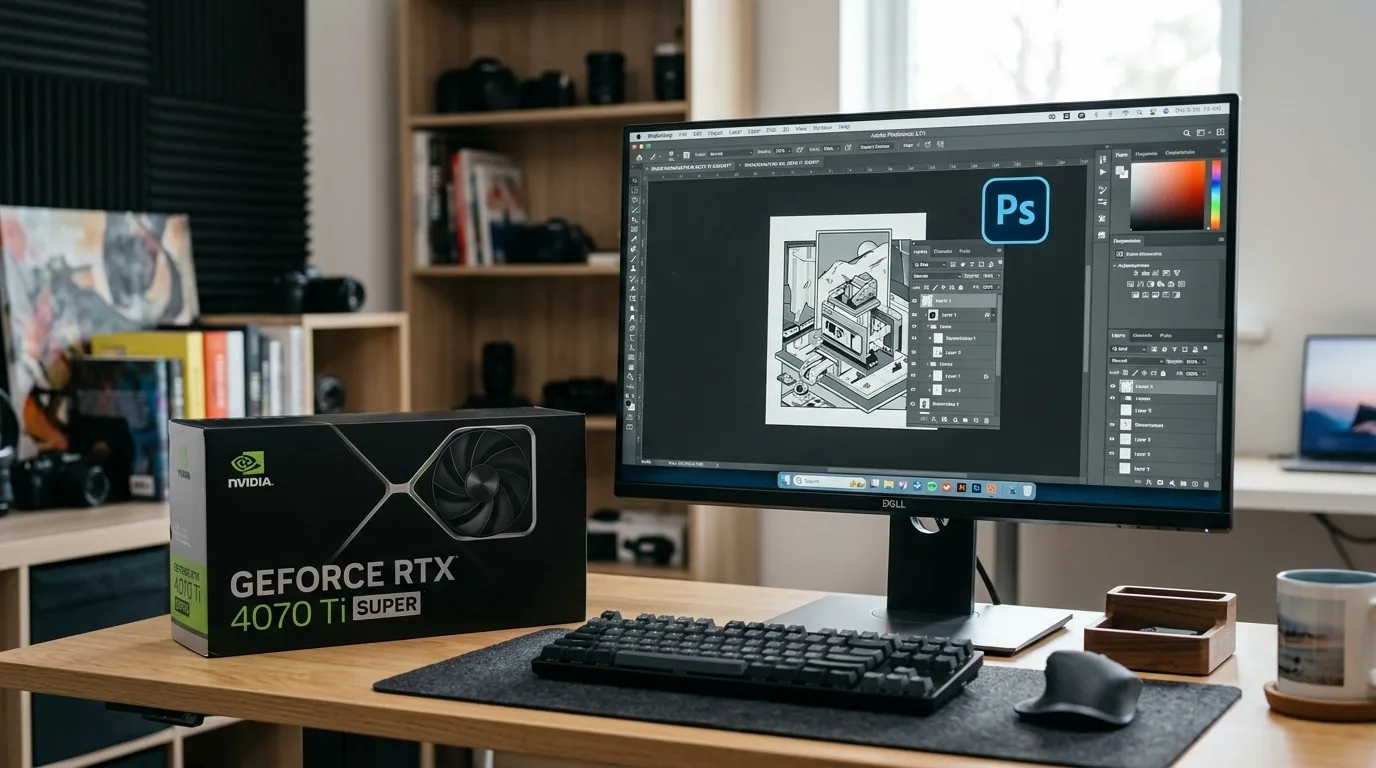
Adobe expanded its collaboration with Nvidia on Thursday to accelerate agentic creative tools across Photoshop, Premiere, Substance 3D, Frame.io and Brand Services, the companies said in a joint release.
Key Takeaways
- Adobe expanded its collaboration with Nvidia to accelerate agentic creative tools across Photoshop, Premiere, Substance 3D, Frame.io and Brand Services
- The partnership targets GPU acceleration and software optimization to reduce latency for AI features that generate, edit or render content
- Adobe introduced its Firefly generative AI models in 2023 and expanded them into Photoshop, Premiere and Illustrator
- Adobe and Nvidia did not disclose financial terms or a timeline for optimized features to reach general availability
The expanded partnership targets optimization of Adobe’s flagship creative applications on Nvidia’s GPU hardware and software stack, aiming to cut latency for AI features that generate, edit or Render (RNDR) content with minimal manual input.
Agentic AI, in this context, means software that can carry out multi-step creative tasks, such as retouching an image or assembling a video sequence, largely on its own after a single instruction rather than responding to each click. The release frames the work as extending an existing relationship between the two companies rather than announcing a new product.
Adobe’s tools already use AI models, branded Firefly, for generative image and video features embedded across its Creative Cloud suite.
The expanded Nvidia deal focuses on the infrastructure layer underneath those agentic creative tools, the GPU acceleration and software optimization that determines how quickly an agentic task completes once a user triggers it.
Faster inference matters commercially for Adobe because agentic features that take too long to render get abandoned mid-task, undermining the pitch that AI tools save creative professionals time rather than adding a wait.
Why GPU Optimization, Not Model Size, Decides The Speed Of Agentic Creative Tools
The bottleneck in agentic creative tools is rarely the AI model itself but the hardware pipeline moving data between a user’s prompt and a rendered result.
Also Read: Databricks Launches Unity Gateway To Fix AI Spending Blind SPOT: ‘How Much Are You Spending’
Nvidia’s role in deals like this one typically involves tuning its CUDA software layer and GPU memory allocation so Adobe’s models run with less latency on the same chips, rather than requiring Adobe to train a smaller model. This optimization logic echoes Nvidia’s open-source Run:ai platform, the kind of automation layer other companies in the GPU ecosystem have built tools around this same week.
For Adobe’s roughly 30 million Creative Cloud subscribers, the practical payoff is agentic features in Premiere or Substance 3D that finish multi-step edits in seconds rather than minutes, a gap that has pushed some professional editors toward faster but less capable competitors.
The next milestone to watch is whether Adobe publishes concrete latency benchmarks, since Thursday’s release describes the collaboration’s goals without disclosing speed figures.
From Firefly Launch To Infrastructure Deal
Adobe introduced its Firefly generative AI models in 2023 and has steadily expanded them into Photoshop, Premiere and Illustrator through successive Creative Cloud updates.
Thursday’s announcement extends a standing Nvidia relationship that had previously centered on enterprise AI tooling rather than consumer-facing rendering speed, marking a shift toward optimizing the GPU layer beneath Adobe’s agentic features directly. The expanded scope now covers five product lines, up from the narrower deployments the two companies had detailed in earlier joint statements.
What Adobe Has Not Disclosed Yet
Adobe and Nvidia did not disclose financial terms of the expanded deal or a timeline for when optimized features reach general availability across all five product lines.
The companies frame the work as ongoing engineering collaboration rather than a dated product launch, leaving open how quickly Adobe’s subscriber base will notice the speed gains.
Industry watchers will look to Adobe’s next quarterly earnings call for commentary on AI feature adoption tied to this infrastructure work.
Read Next: META Bets On Open Weights With Muse Spark Open, No Benchmarks Yet