Recorded Future Targets Shadow AI Risk As 75% Of Staff May Go Rogue By 2027
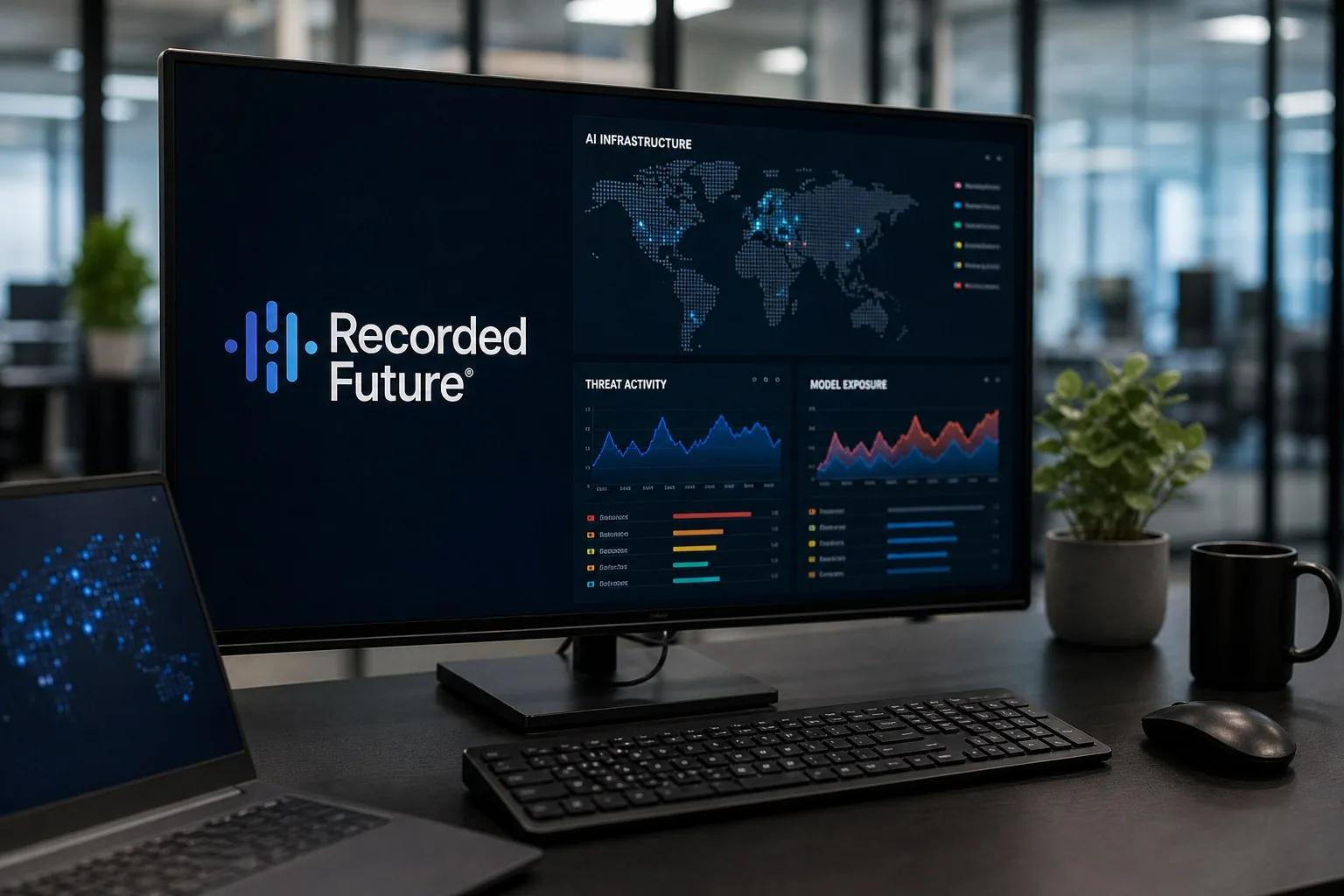
Recorded Future launched AI Infrastructure Indicator Lists this week, a free dataset for its Cyber Operations customers designed to detect shadow AI, the unsanctioned use of AI tools inside a company that bypasses procurement and IT review.
Key Takeaways
- Recorded Future launched AI Infrastructure Indicator Lists this week as a free dataset for its Cyber Operations customers
- The lists identify and classify network traffic tied to AI tools so security teams can enforce policy and spot data exposure
- Recorded Future cited an estimate that 75% of employees will adopt or build technology outside formal IT governance by 2027
- Enterprise uptake data on whether the lists curb shadow AI adoption has not yet been published
The lists identify and classify network traffic tied to AI tools so security teams can enforce policy and spot data exposure before it spreads, the company said in a blog post.
Recorded Future sells threat intelligence software that helps corporate security teams track external risks, from leaked credentials to malware infrastructure, by scanning open, dark and technical sources for indicators of compromise. The new lists extend that model to internal AI usage rather than external threats, a shift that reflects how AI tools have become infrastructure security teams can no longer ignore.
Why One Open-Source Chatbot Became A Governance Problem
Recorded Future’s post points to OpenClaw, a free open-source AI assistant that saw rapid, unsanctioned adoption this year with almost no organizational oversight, as the kind of case the new lists target.
An employee can install such a tool on a personal laptop with no procurement process and no security review, creating a blind spot that multiplies across a workforce.
Recorded Future cited an estimate that 75% of employees will adopt or build technology outside formal IT governance by 2027.
Also Read: Hexaware Soars 6% On Anthropic’s Partner Status, 1,100 Staff Claude-Certified
From Perimeter Defense To Agent-Level Oversight
Corporate security spending has historically focused on perimeter defense, firewalls, endpoint detection, and identity management, built around the assumption that software gets deployed through a known procurement pipeline.
Agentic AI breaks that assumption because autonomous agents can call external services, move data and make decisions without a human approving each step. Recorded Future’s indicator lists attempt to extend the same threat-intelligence playbook the company built for tracking hackers onto tracking an organization’s own ungoverned AI footprint.
The Gap Between AI Adoption And AI Oversight
Security teams have spent the past two years absorbing what the industry calls security debt, the backlog of unresolved vulnerabilities that accumulates faster than teams can patch them.
Shadow AI adds a new layer to that debt because agentic tools can operate across interconnected systems, widening the blast radius if one compromised tool has broad permissions.
Whether Recorded Future’s lists actually curb shadow AI adoption, rather than simply give security teams a dashboard to watch it grow, depends on enterprise uptake data the company has not yet published.
Read Next: MetaMask’s Agent Wallet Lets AI Bots Trade On Aave: Kulechov Confirms Rollout