U.S. Backs Australian Scandium Mine, Shares Surge 29%
Sunrise Energy Metals, an Australian rare earth miner operating one of the most significant scandium deposits outside Russia and China, surged as much as 29% on August 10 after the U.S. Department of War backed plans to build a domestic scandium mine.
The investment is part of the Trump administration’s broader push to challenge China’s dominance over critical mineral supply chains.
Key Takeaways
- Sunrise Energy Metals shares rose as much as 29% on August 10 after the U.S. Department of War backed its scandium mine
- The Sunrise project is located in New South Wales and holds one of the largest known scandium deposits outside Russia and China
- China controls an estimated 85% of global rare earth processing capacity, built over three decades through heavy state subsidies
- Annual global scandium consumption is estimated at roughly 15 to 20 tonnes, making it a commercially rare and thinly traded material
Scandium is a metal used in high-strength aluminum alloys and solid-oxide fuel cells, making it strategically valuable for aerospace and defense manufacturing.
The move marks one of the most direct U.S. military investments in an allied nation’s mining sector in recent memory.
CNBC reported the announcement on the morning of August 10, citing the Department of War’s formal backing as the catalyst for the intraday move. The Australian scandium mine in question is operated by Sunrise Energy Metals in New South Wales.
The Sunrise project holds one of the largest known scandium deposits outside of Russia and China, a fact that has attracted Western government interest for years.
The Australian Scandium Mine At The Center Of A Minerals Race
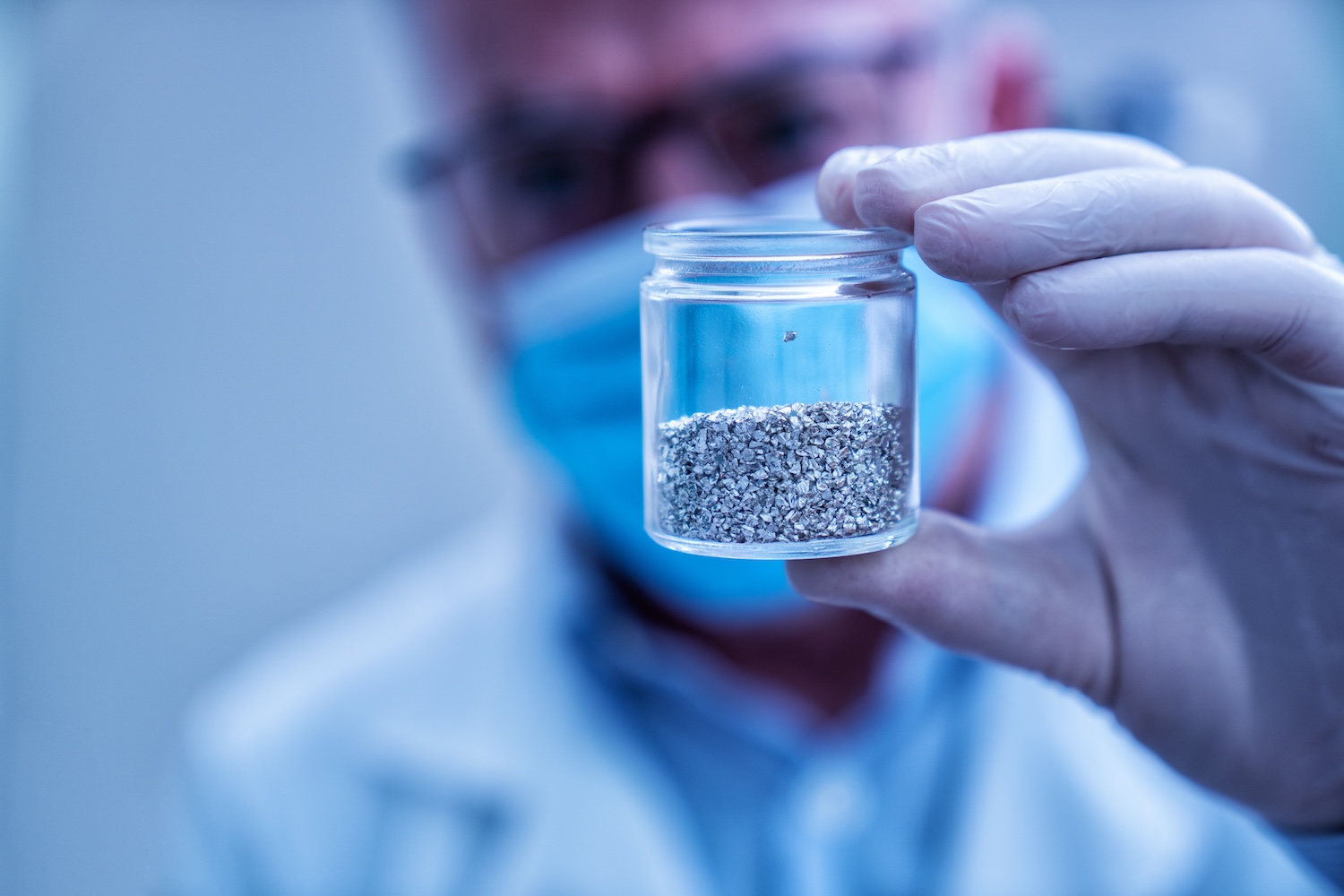
Scandium is not widely understood outside materials science. It is a soft silvery metal that occurs in trace concentrations inside other mineral ores, making extraction expensive and commercially rare.
When alloyed with aluminum, it produces a material significantly stronger and lighter than standard aluminum, properties that matter enormously in fighter-jet airframes and next-generation rockets.
Global scandium production is dominated by Russia and China, with annual output measured in tens of tonnes, not thousands. That scarcity gives any nation with a large, accessible scandium deposit significant geopolitical leverage.
The U.S.
Department of War, formerly known as the Department of Defense before its renaming under the Trump administration, has been accelerating investments in allied-nation mining projects as part of a strategy to reduce dependence on Chinese-controlled supply chains. The Sunrise Energy Metals backing fits a pattern of Washington treating mineral security as a defense priority on par with weapons procurement.
Why China’s Grip On Rare Earths Forced Washington’s Hand
China controls an estimated 85% of global rare earth processing capacity, a position it has built over three decades through heavy state subsidies and willingness to accept lower environmental standards.
In 2010, Beijing briefly restricted rare earth exports to Japan during a territorial dispute, an episode that alerted Western governments to the strategic vulnerability created by concentrated mineral supply chains.
The Trump administration has moved aggressively to address that vulnerability. In the months before the Sunrise Energy Metals announcement, Washington backed rare earth projects in Canada, Greenland, and the Democratic Republic of Congo.
The Australian investment extends that network into the Indo-Pacific, where the administration has framed critical-minerals cooperation as a pillar of the AUKUS security partnership alongside submarine technology and advanced defense systems.
Scandium sits in a slightly different category from the better-known rare earth elements such as neodymium and dysprosium, which power electric-vehicle motors and wind turbine magnets. Scandium’s primary defense application is in aluminum alloys used by the aerospace industry.
Also Read: Bitcoin’s $70,000 Surge Started Outside Crypto, And Traders Missed The Real Trigger
The U.S. Air Force and Navy have both identified scandium-aluminum as a material they want to scale domestically, but reliable supply has been the obstacle.
The Sunrise project is one of very few globally that could produce scandium at the volumes needed to move the needle.
How A 29% Surge Reflects Thin Markets And Concentrated Bets
A 29% intraday move is dramatic even by the standards of junior resource companies, but it is not unusual when a single government announcement transforms a project’s commercial viability overnight. Sunrise Energy Metals had been trading at depressed levels consistent with the broader junior mining sector, where capital has been scarce since interest rates rose in the early 2020s.
Government backing from the world’s largest defense spender effectively de-risks the project by providing an anchor off-take relationship and, typically, concessional financing.
Investors read that combination as a near-guarantee that the mine reaches production, which collapses the risk discount embedded in the share price. No off-take contract has been disclosed.
The move prices in the possibility of one, not the fact of it.
The market for scandium is also thin enough that a single large buyer, in this case the U.S. government and its defense contractors, can shift the entire supply-demand picture. Annual global scandium consumption is estimated at roughly 15 to 20 tonnes, a volume so small that the Sunrise project, if fully developed, could supply a meaningful share of Western demand on its own.
That concentration amplifies the price signal that any credible development milestone sends.
From Junior Miner To Geopolitical Asset
For Sunrise Energy Metals, the Department of War investment transforms the company’s positioning from speculative junior miner to strategic supplier. That transition has happened before in the critical-minerals space. MP Materials (MP), the California-based rare earth company that operates the Mountain Pass mine, went from near-bankruptcy in 2017 to a government-backed supplier of rare earth oxides to the U.S. military within five years, partly through a similar sequence of defense-department engagement and off-take agreements.
The Sunrise Energy Metals situation echoes that arc.
If the Department of War moves beyond initial backing to a formal off-take or development-financing agreement, the valuation case becomes substantially stronger. For that valuation to make sense, the mine must reach commercial production, secure binding off-take volume at a price above operating cost, and do so within a financing structure that does not dilute equity to the point of erasing the share-price gain.
Raising the project-finance capital needed to move from a deposit to an operating mine typically requires hundreds of millions of dollars and five to ten years even under favorable conditions.
The 29% move on August 10 prices in the possibility. The contractual disclosures will determine whether the arithmetic holds.
Whether the Department of War’s backing translates into those commitments, or remains a strategic endorsement, is the question that will define the Sunrise project’s trajectory from here.
Read Next: Bitcoin and Ether Soar Past Struggling XRP in 5-Week Surge