
Yann LeCun’s AI Learned A Real City Map With No GPS At All
An AI built by Yann LeCun and his New York University team learned a map of real city streets just by watching walking videos, with no GPS or location data, and could tell where it stood to within 1.6 meters, a small but telling win for LeCun’s bet against chatbot-style AI.
Key Takeaways
- The AI built its own street map from first-person walking footage and movement commands alone, with no location data
- On its best scene it placed itself within 1.6 meters, against 3.4 meters for a standard method
- It reached 92.9% of hard maze goals from a first-person view, against 21.2% for the standard method
- The work backs LeCun’s argument that AI needs an inner model of the world to plan, not just text prediction
The paper, released on Nov. 18 by New York University’s Agentic Learning AI Lab, was led by Mengye Ren with Ying Wang, Christopher Hoang, Yilun Kuang and LeCun, who is listed with both the university and AMI Labs, his world-model startup. The report asks a simple question: can an AI that only watches and moves build a usable map in its head?
LeCun’s Big Bet
LeCun has long argued that chatbots trained to predict the next word will not reach human-level intelligence on their own. He says AI also needs a world model, an inner picture of how things work, so it can imagine the result of an action before taking it. His design for this is called JEPA, short for joint embedding predictive architecture. Instead of predicting every pixel of the next video frame, it predicts a compressed summary of what comes next.
For a robot or self-driving car, that summary has to work like a map. Moving closer to the goal should feel closer inside the model, and important objects must not vanish from it. The paper calls these two needs geometry and content, and finds that popular training methods usually deliver only one.
How The AI Learned A Map
The team’s first fix, called SVReg, made the AI’s inner map smooth, so routes that are smooth in real life stayed smooth inside the model. But it had a catch. The AI started forgetting things that sit still until something moves them, like a block waiting to be pushed, because they are hard to predict.
The final version, Slow SVReg, adds two tweaks. A few parts of the model are pushed to change slowly between frames, and the model assumes by default that nothing changes unless an action changes it. That kept both the map and the objects.
Then came the real test. The team used 3D scans of real city blocks captured on foot, rendered first-person walks with random turns and trained the AI only on what it saw and how it moved. A map of the walked streets appeared inside the model on its own, with no one telling it where it was.
The maze column shows success on far-away goals in a maze seen only from a first-person view. The city column shows how far off the AI’s sense of its own position was on one scanned city scene.
Also Read: GigaAI Hong Kong IPO: Breakthrough Moment for World Model AI
Why This Matters
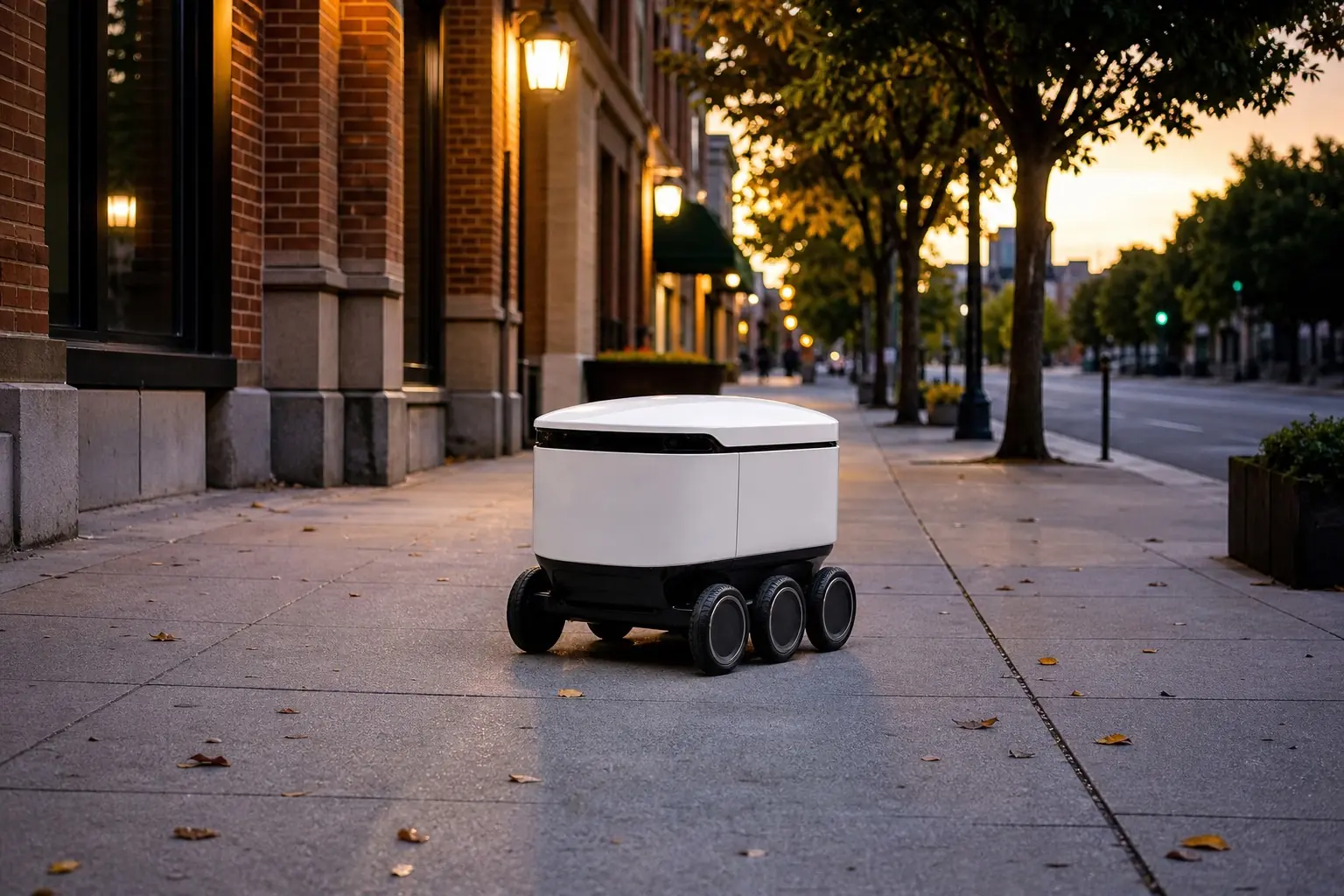
Knowing where you are and planning a route without being told is the basic skill behind delivery robots, home robots and self-driving cars. Today most of them lean on GPS, labeled maps or huge amounts of hand-annotated data. An AI that builds its own map from what it sees could work in places those tools miss, like indoors or on unmapped streets.
It also matters for the wider AI race. Most money is still flowing into ever-bigger language models. LeCun is betting the next leap comes from world models instead, and papers like this are how that camp shows progress beyond talk.
What To Watch Next
The results come with clear limits. This is a technical report, not yet peer-reviewed. The 1.6-meter result is on a single scene. Averaged over ten more scenes, the new method was off by 3.1 meters, and a rival method did better on that number at 2.1 meters, though the new method drew a far clearer map. The city walks were rendered from 3D scans, not filmed by a robot on a real street, and the other tests were small lab tasks like mazes and pushing a block.
The next step to watch is whether this recipe works on real robots in messy, changing places, where people walk by and objects move. The team has made the paper and project site public, so others can test that claim.
Read Next: Amazon Hands Alexa 5 New Gadgets And A 3D Map Of Your Home